
Arrest Records Across Arkansas
Arkansas arrest records begin with the Arkansas agency that makes the arrest. A county sheriff, city police officer, Arkansas State Police trooper, campus officer, Community Correction officer, or federal officer may create the first report. If the person is booked, the receiving Arkansas county jail creates a second record with intake facts, allegations, bond, holds, custody status, and release information.
A single Arkansas arrest can also create a court file and a fingerprint-linked ACIC cycle. Those are separate records. The Arkansas officer's narrative describes the event. The jail log proves intake and custody. The court docket shows filed charges and their outcome. ACIC receives covered fingerprints and reported dispositions for its central Computerized Criminal History repository. None of those sources alone is a complete account.
Four Arkansas Arrest Records
The Arkansas four-record model explains most apparent conflicts in arrest history. An Arkansas booking charge may reflect the officer's initial allegation. A prosecutor can file a different or amended charge. The Arkansas court later enters a disposition for each count. ACIC can lag if the sentencing court has not sent accurate disposition data.
| Record | Created By | Best Use |
|---|---|---|
| Arrest report | Arresting agency | Event narrative, report number, time, location, and agency facts. |
| Booking record | County jail | Intake allegations, custody, bond, holds, and release. |
| Court case | Circuit or district clerk | Filed charges, hearings, disposition, judgment, and sentence. |
| ACIC cycle | ACIC from fingerprint and court submissions | State repository arrest cycle and reported outcome. |
An Arkansas name match should be checked with date of birth, case number, booking number, or a fingerprint-based personal review. Common names and variant spellings can connect the wrong person to an Arkansas result.
From Arkansas Arrest to Rap Sheet
After a covered Arkansas felony or Class A misdemeanor arrest, the receiving official takes fingerprints and a photograph. Arkansas rules require covered arrest prints to reach the Arkansas State Police Identification Bureau within 48 hours. The Arkansas arrest receives an Arrest Tracking Number, or ATN. It links that event and its charges to later court reporting. The person-level SID is a different identifier.
Data flow: Arrest › Booking › Fingerprints › ACIC Repository Entry › Court Disposition
The ATN must reach the Arkansas court file before trial or judgment. The Arkansas sentencing court then reports the result to ACIC. A citation without prints, an unreported disposition, bad identity data, or a sealed outcome can cause the statewide history to differ from the county file. ARCH itself warns that a felony conviction can be absent when the sentencing court has not supplied timely and accurate disposition data.
Who Makes Arkansas Arrest Records
Arkansas custody determines the correct request channel. Sheriff records and jail rosters cover county arrests and detention. City police records units hold their own incident narratives even when the person was booked into an Arkansas county jail. Arkansas State Police maintains its agency reports and accepts records requests under the Arkansas Freedom of Information Act. Campus and institutional police have their own custodians. Federal arrests route to the federal agency and district court.
Request the Arkansas arrest narrative from the arresting agency, not automatically from the jail. Describe the report number, date and time, place, involved party, and record type. Arkansas FOIA requests may be made through the custodian's offered in-person, phone, mail, fax, email, or electronic channel. Active investigations and protected juvenile, victim, medical, ACIC, or NCIC data may be withheld or redacted.
Note: The jail keeps custody data, while the arresting agency usually keeps the officer's incident narrative and investigative record.
Arkansas Arrest Lookup Options
No one public system contains every Arkansas arrest record. Lead with the Arkansas county for a recent event. Use statewide systems only for the layer each one actually covers. A current Arkansas booking can appear before a prosecutor files charges, before Search ARCourts creates a docket, and before ACIC receives a complete fingerprint cycle.
- Identify the likely county and check its official jail roster, new-booking view, recent releases, or public information line.
- Ask the arresting agency for the incident or arrest report through its records process.
- Search Search ARCourts after filing, checking both Circuit Court and the correct district court.
- Use Arkansas Criminal History Search only for its defined statewide subset, not as a recent-booking index.
- Use ADC for state custody, VINE for participating custody notifications, and the federal locator for federal imprisonment.
Open the directory of all 75 Arkansas counties to reach local booking and arrest sources. If no public roster exists, contact the jail. For current bond and hearing details, verify with the jail and court because public portals can lag.
Arkansas UCR Arrest Entries
ACIC administers Arkansas's Uniform Crime Reporting program and publishes statewide incident-based reports. The finalized 2025 Age of Persons Arrested table recorded 46,341 Group A entries and 52,997 Group B entries, or 99,338 combined offense and arrest entries. Those counts are not unique people, convictions, or a name-search database.
Selected 2025 Arkansas entries include 13,544 drug or narcotic violations, 8,397 simple assaults, 6,176 DUI entries, and 4,595 aggravated assaults. The Arkansas figures describe agency reporting volume and offense categories. They cannot establish what happened in one person's case. Use ACIC's Arkansas Crime Statistics program for finalized state reports and the FBI Crime Data Explorer for the federal publication layer.
Fields on an Arkansas Arrest Record
Arkansas detention standards require a log for every detainee. Core Arkansas log items include physical and demographic descriptors, arrest and confinement times, the reason for confinement, felony or misdemeanor indicator, arresting or confining officer, warrant or commitment facts, release time, and customary booking data. Arkansas counties may publish more, but no uniform statewide display is required.
| Name & Identifiers | Display name, booking number, and the county's allowed age, date-of-birth, or physical descriptors. |
|---|---|
| Arrest Details | Arrest date, time, location where public, arresting agency, and report or warrant reference. |
| Booking Details | Intake and release dates, photograph where published, facility, and housing or hold flags. |
| Charges at Intake | Initial allegations, statute or class when supplied, and a separate line for each count. |
| Bond & Court | Bond amount or type, no-bond status, issuing court, and next date when available. |
| Release Status | Release date and reason, transfer, detainer, or continued custody information. |
An official Arkansas booking photograph proves that a photo was taken during intake. It does not prove guilt. Arkansas has no reviewed blanket law requiring every adult booking image to be online, and investigation, juvenile, safety, medical, or court-order limits may apply. Arkansas public access does not require further republication of booking images or private names.
Arkansas County and ADC Custody
Arkansas county jails and the Arkansas Department of Corrections cover different stages. County jails commonly hold people awaiting first appearance, bond, trial, transfer, or serving a local sentence. Each Arkansas county sets its own roster system and display window. There is no ADC search that replaces all county rosters. A person sentenced to ADC can also remain in county backup status before transfer.
The Arkansas Department of Corrections Inmate Search is for state correctional custody and related categories. It can search by ADC number, county, last name, first name, facility, gender, offense category, age, and race. The Arkansas disclaimer must be accepted. Public Arkansas time and release calculations can change, so ADC directs readers to verify them with public information staff.
| Custody Source | What It Covers | Key Gap |
|---|---|---|
| County jail | Recent booking, pretrial custody, bond, local sentence, and release. | County-specific and often short-lived online history. |
| ADC Inmate Search | State-sentenced custody, ADC identity, offense, facility, and time fields. | Not a statewide county jail roster. |
| Arkansas VINE | Notifications for participating custody events such as release or transfer. | Not a criminal history or court docket. |
| Federal locator | Federal prison custody and certain historical records. | Does not replace a federal court docket or local contract-jail check. |
Arkansas County Booking Sources
An Arkansas county roster can show how local booking data differs from a statewide history. The official Pulaski County jail roster is one representative Arkansas county-operated source, not a statewide database.
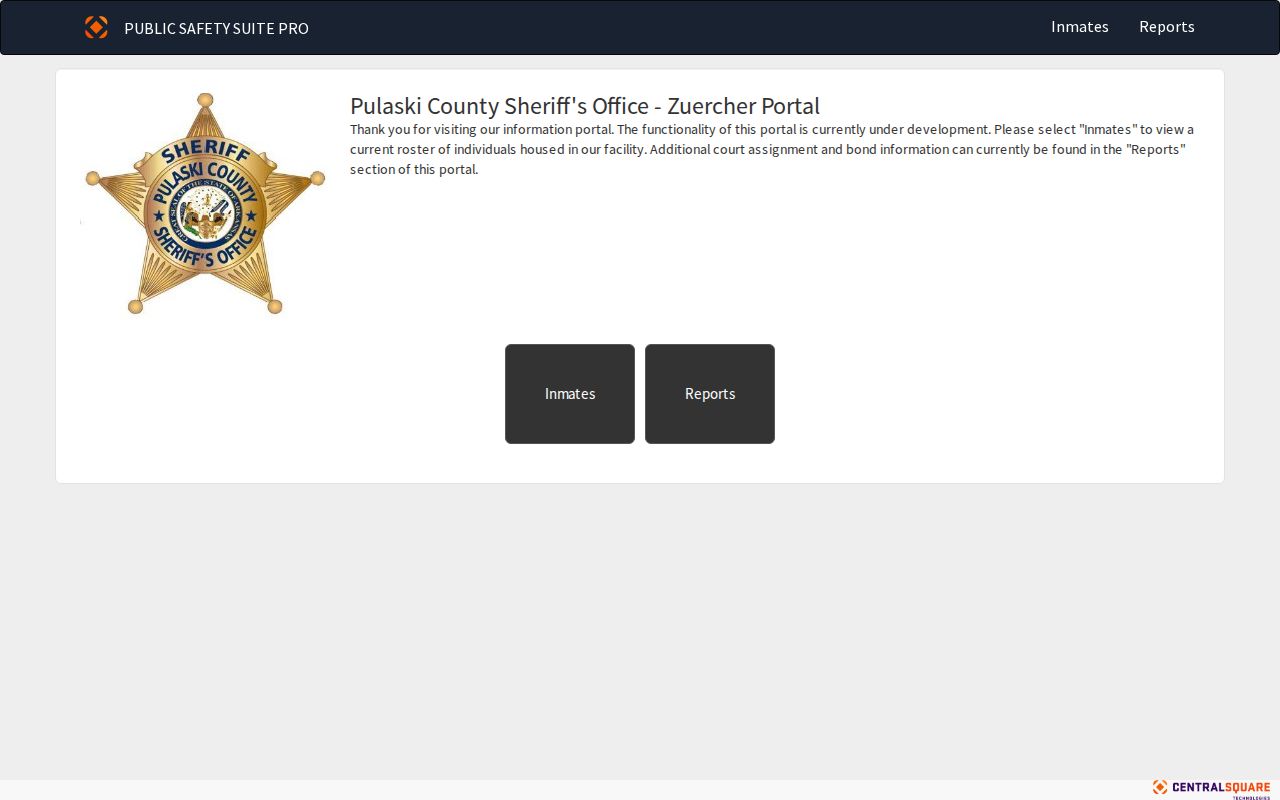
The roster image illustrates the local route for current custody. The Pulaski County records site supplies the broader county route. The same search must be repeated in the county of arrest, and any allegation should be checked against the later Arkansas court case.
Arkansas roster windows and field labels vary across the state. Some counties offer current inmates, new bookings, and recent releases. Others provide a phone route instead. The Arkansas arresting agency can also differ from the jail, so note the agency name before requesting a report.
Arkansas Arrests and Convictions Compared
An arrest is an accusation and custody event. A conviction is a court judgment based on a plea or verdict. Arkansas public systems reflect that difference. ARCH includes Arkansas felony and misdemeanor convictions plus open Arkansas felony arrests less than three years old, but it excludes dismissed charges, unresolved misdemeanor arrests, older open felony arrests, active warrants, sealed matters, non-fingerprinted arrests, and not-guilty outcomes.
| Arrest Record | Conviction Record | |
|---|---|---|
| Created by | Arresting agency and county jail. | Court judgment, later reported to ACIC. |
| What it proves | An arrest or booking occurred. | The court entered guilt by plea or verdict. |
| Public access | County, agency, court, and limited ARCH channels. | Court docket and defined repository channels. |
| Outcome detail | Usually absent at intake. | Shown in the final disposition and judgment. |
| Sealing | Depends on Arkansas eligibility and an order from the case court. | Eligibility is offense and program specific. |
Note: An Arkansas arrest entry without a disposition is not proof of guilt; check every count in the filing court.
Correcting Arkansas Arrest History
If a dismissed Arkansas arrest still appears, start with the final Arkansas county court document. Obtain a certified disposition or sealing order from the clerk. Then use ACIC's personal record review and correction process. ACIC requires the person or attorney to secure correct source documents from the court; it does not change a disposition based only on an assertion.
Sealing begins in the Arkansas court that handled the offense. Eligibility depends on the offense, outcome, sentence completion, prior history, and any route such as Act 346 or a specialty court. ACIC posts forms but will not choose the proper form. After a correctly filed sealing order reaches ACIC, the agency states that Arkansas law allows 30 days to process it.
Keep certified copies. Verify that the clerk, arresting agency, ASP or ACIC, and public portals update. Sealing limits ordinary public access but does not promise destruction or invisibility to every authorized agency. The ACIC criminal history forms page provides the official review and sealing materials.