
How Arkansas Courts Handle Criminal Cases
Arkansas Circuit Courts are courts of general jurisdiction. They try felony cases and may hear misdemeanors. State district courts handle misdemeanors, violations, traffic matters, and preliminary felony work within their jurisdiction. Local district departments also hear ordinance and lower-level cases. A circuit may cover more than one county, yet each county's circuit clerk keeps the official case files filed there.
The Arkansas court record and the ACIC rap sheet serve different purposes. An Arkansas court file follows one prosecution. It may contain the charging paper, motions, hearings, pleas, judgment, sentence, and later revocation or sealing activity. ACIC compiles fingerprint-linked arrest cycles and dispositions reported by Arkansas courts. A missing repository entry does not erase a county case, and a repository match does not replace the Arkansas clerk's original file.
The Arkansas Judiciary publishes a statewide circuit court directory that maps the Arkansas trial-court structure. The directory view below helps show why a statewide search still routes document requests to an Arkansas county clerk.
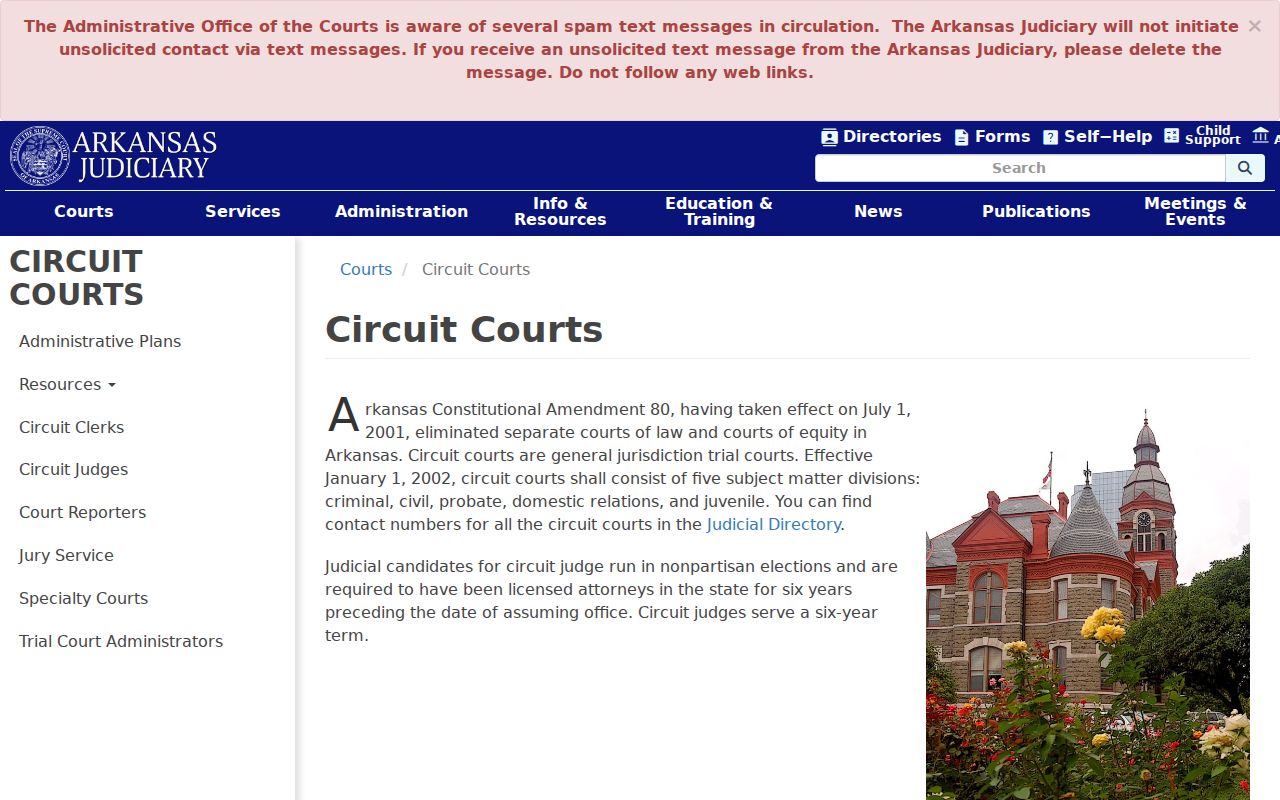
That Arkansas county-based custody is the key to certified copies, older scans, exhibits, and records that cannot be displayed online.
Arkansas Circuit and District Courts
Arkansas court level predicts where a criminal case record is likely to appear. Circuit Court has exclusive original felony jurisdiction. Arkansas district courts are the usual starting point for traffic, violation, and misdemeanor matters, as well as early felony proceedings. The Arkansas Court of Appeals and Arkansas Supreme Court review assigned appeals, but they do not become custodians of the full trial evidence merely because an appeal was filed.
The Arkansas district courts directory shows the separate state and local structure. Its statewide view is useful before asking the wrong clerk for a misdemeanor or citation record.
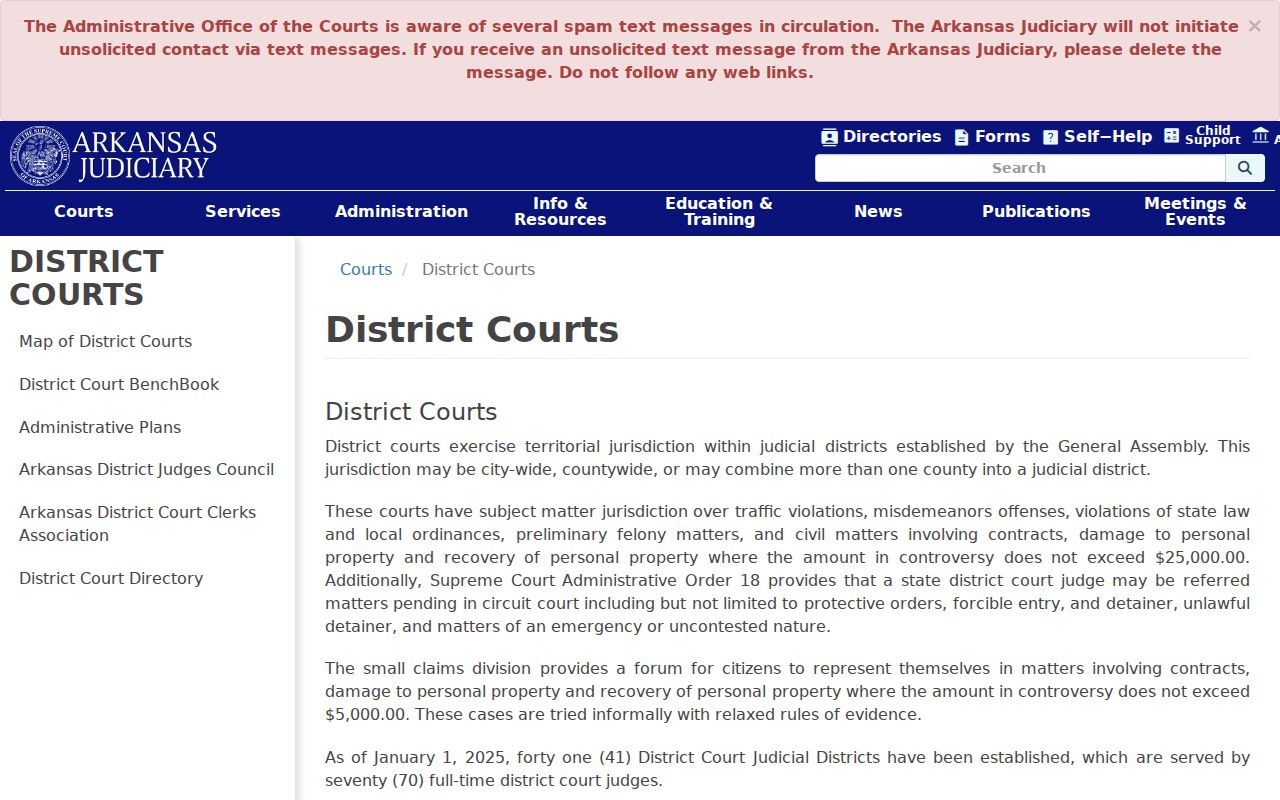
The image reinforces a practical point: one Arkansas county can have several court departments or locations, and not all feed the same public online detail.
Running a Search ARCourts Search
Search ARCourts is the public Arkansas judiciary interface that replaced Public CourtConnect. All Arkansas circuit courts provide case statistical information. Some district courts provide online case information, but the service does not promise every lower-court file. Arkansas search results are informational. They are not legal notice or certified court copies.
- Choose a participant or case search and enter the most exact facts available.
- Use a full legal name, or use the case or citation number when known.
- Filter by county, court location, case type, and date range to reduce same-name results.
- Open the docket and read each charge, event, and disposition through the latest entry.
- Ask the named Arkansas circuit or district clerk for certified or missing documents.
| Field Label | Type | Required | Notes |
|---|---|---|---|
| First, Middle, Last Name | Text | Search dependent | Three or more letters can return names beginning with the entry and aliases. |
| Case or Citation Number | Text | No | The strongest route when the exact number is known. |
| Start and End Date | Date | No | Narrows the filing or event window. |
| Case Type | Selector | No | Includes Arkansas criminal, felony, misdemeanor, warrant, traffic, drug court, and sealing types. |
| County and Court Location | Selector | No | The county menu includes all 75 Arkansas counties. |
| Date of Birth | Date | No | Must be complete and present in the participant record to match. |
The Judiciary's Search ARCourts transition and help page documents the newer search and filter approach.
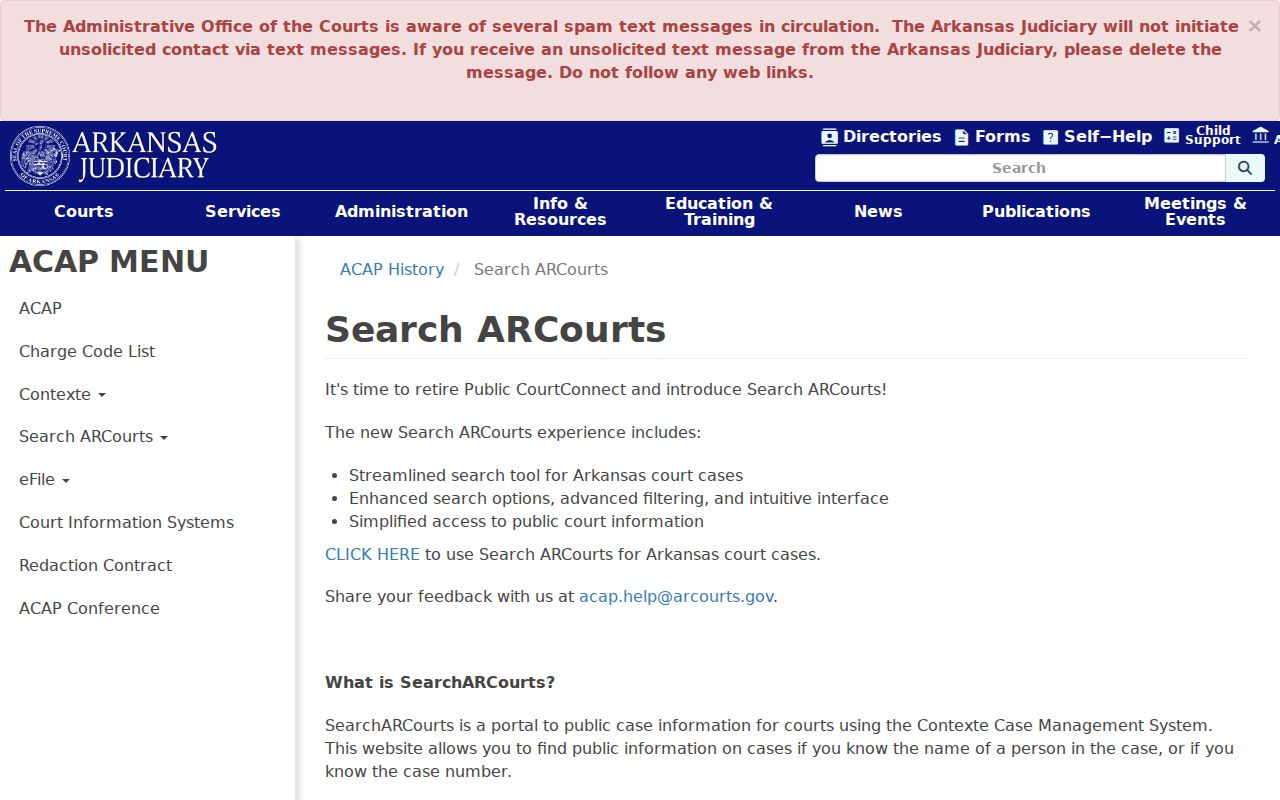
The help view is a useful cross-check when labels or filters change as the new platform develops.
Arkansas Court Coverage Gaps
Search ARCourts is statewide at the Arkansas circuit statistics level, not at every record level. Official Arkansas implementation material lists all counties for circuit coverage, with system start dates that do not guarantee full older-file backfill. The Arkansas district implementation list is much shorter. A missing Arkansas district matter, bench warrant, local ordinance case, or old docket therefore means “not found online,” not “no case exists.”
Use the Arkansas county and court named on a citation, bond paper, or prior docket. Ask the Arkansas clerk about archives, courthouse terminals, document lists, and copy delivery. If a misdemeanor or traffic matter does not appear, check the relevant Arkansas district or local department. Search ARCourts may display some public attachments, but certified copies, full financial ledgers, exhibits, and older scans can remain clerk-only.
Note: A statewide Arkansas court search is a starting index, while the filing clerk remains the official record custodian.
What an Arkansas Case File Contains
An Arkansas case header typically identifies the case number, court, county, case type, filing date, status, assigned judge, parties, and counsel. The Arkansas docket then records what happened and when. Charge rows must be read one by one because counts within the same case can end differently.
| Case Number & Court | Identifies the filing court, county, and the file to request from the clerk. |
|---|---|
| Charging Documents | Shows the information, complaint, indictment, amended count, statute, and offense class when public. |
| Docket Entries | Lists filings, pleas, motions, hearings, continuances, warrants, orders, and appeal notices. |
| Hearing Dates | Shows scheduled and completed events, subject to later court changes. |
| Disposition | Records the outcome for each charge, such as conviction, dismissal, acquittal, or nolle prosequi. |
| Sentence & Judgment | States the court's formal sentence, costs, custody, probation, and commitment terms when public. |
“Closed” is an Arkansas case status, not a finding of guilt. Read the disposition attached to each count and the final order. A booking allegation may differ from the charge an Arkansas prosecutor files, and an amended count may differ again from the final judgment.
Reading Arkansas Criminal Case Outcomes
Arkansas docket terms can compress major events into a few words. An arraignment is the hearing where charges are stated and a plea is entered. A disposition is the result of a specific charge. “Nolle prosequi” means the prosecutor formally chose not to proceed with that charge at that time. An acquittal is a not-guilty result. A judgment and commitment is the formal conviction and sentence instrument used for correctional custody.
- Count
- One separately numbered accusation within a case.
- Capias
- A court command to take a person into custody, often for failure to appear or comply.
- Deferred disposition
- A result handled under a specific program or statute, sometimes with later dismissal or sealing after compliance.
- Revocation
- A later proceeding alleging breach of probation or other supervision terms.
Arkansas drug court and veterans treatment court entries need special care. Review hearings, sanctions, and program referrals are not final outcomes. Arkansas provides program-specific sealing forms, which confirms that the last order may control whether the matter was dismissed, sentenced, or later sealed.
Arkansas Criminal Case Stages
An Arkansas police allegation or jail booking can exist before a prosecutor files a court case. Once an information, complaint, or indictment is filed, the Arkansas clerk opens the case and adds hearings and papers to its docket. The defendant enters a plea at arraignment. Pretrial motions and discovery may follow. A plea agreement or trial resolves each count, and the Arkansas court enters the disposition and sentence.
Case flow: Charges Filed › Arraignment › Pretrial › Plea or Trial › Disposition › Sentencing
Later Arkansas entries can still matter. An appeal, petition to revoke, corrected judgment, sealing petition, or sealing order may change what a reader should conclude. The Arkansas sentencing court reports a disposition to ACIC, but that transfer can lag. Compare the docket with the repository result when one appears incomplete.
Arkansas Criminal Record Access Limits
Arkansas Supreme Court Administrative Order 19 governs court-record access. It distinguishes public access at the courthouse from remote display. Social Security numbers, sealed material, protected victim or minor identifiers, and information made confidential by law or court order do not become public just because other docket fields appear online.
The Arkansas Freedom of Information Act inspection provision generally supports access to agency records, but it is not a substitute for the Arkansas judiciary's court-record rules. Request an Arkansas court document through the clerk and Administrative Order 19. Request a police narrative from the arresting agency under its records process. Those channels hold different records and apply different exclusions.
Arkansas Appeals and Federal Cases
An Arkansas criminal appeal moves into the Arkansas appellate system, but the county trial file still holds evidence and trial-level papers. The Arkansas appellate docket focuses on briefs, orders, opinions, and the record transmitted for review. Start with the trial case number, then follow any notice of appeal to the Court of Appeals or Supreme Court docket.
Federal criminal cases arising in Arkansas use a separate system. The official PACER court search covers the Eastern and Western Districts of Arkansas rather than Search ARCourts.
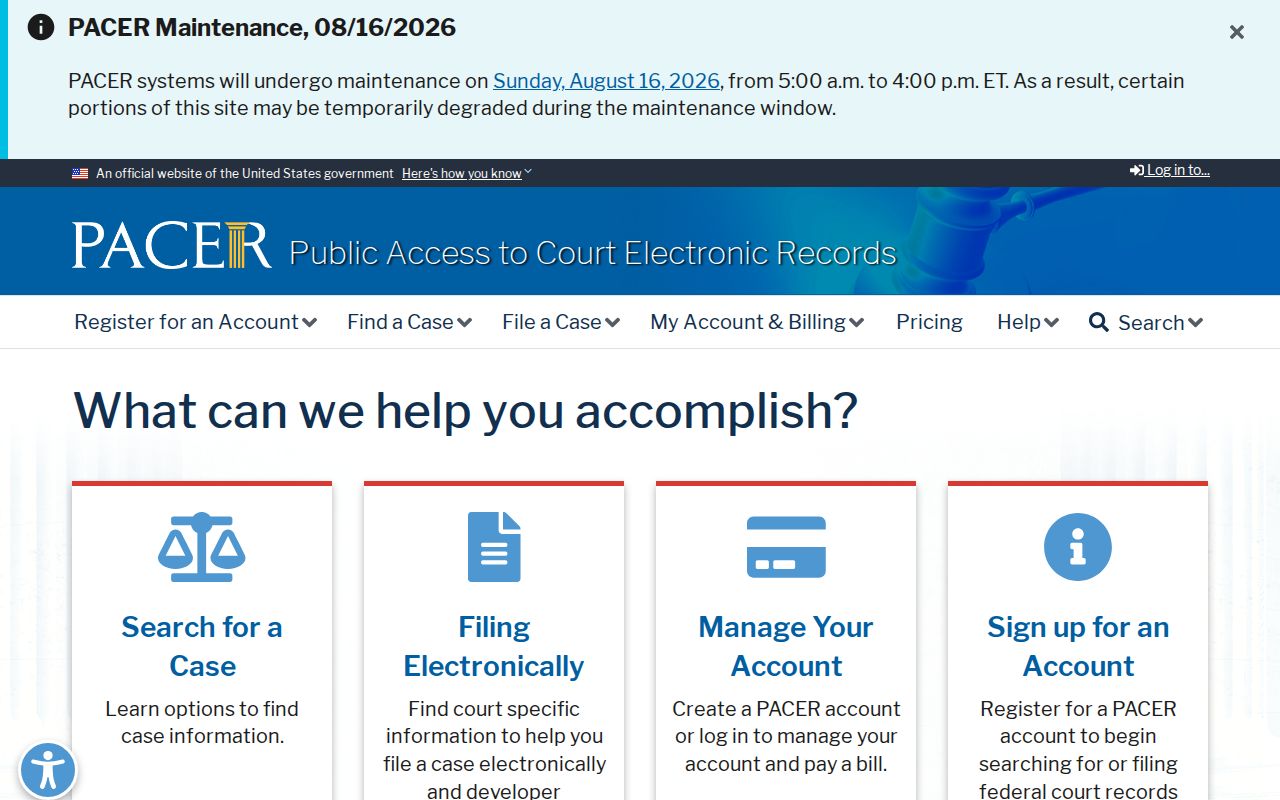
The PACER view marks a hard jurisdiction line: federal dockets, fees, sealed materials, and district clerks remain outside Arkansas's state court index.
County Sources for Arkansas Case Records
The complete Arkansas criminal case file sits with the circuit or district clerk where it was filed. Use the statewide result to identify the exact county, court, and case number. Then ask that clerk which documents are public, whether an older file is archived, what plain and certified copies cost, and how the office accepts requests. Local methods and charges vary because no single statewide criminal-file copy price was found.
This route is also essential for a case that appears incomplete online. An Arkansas clerk can confirm whether a document exists but is courthouse-only, whether a later order has been entered, and whether certification is available. The Pulaski County records site and Benton County records site show how metro searches route to the correct local layer. For all court contacts, browse the directory of all 75 Arkansas counties.